Arwyn
[Arwyn's role to be confirmed by Chris]
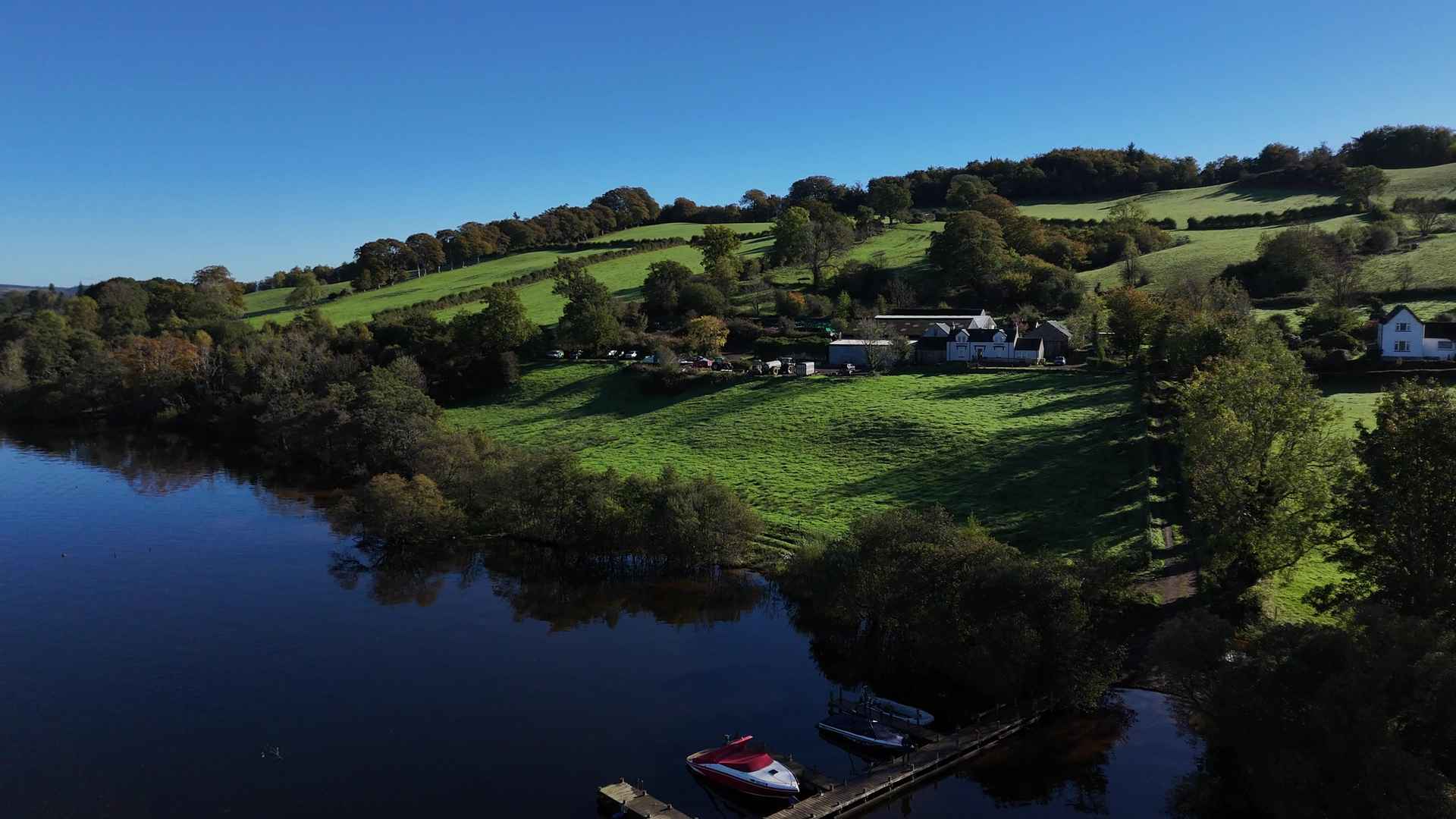
On the south-east shore of Loch Lomond, in the Loch Lomond and the Trossachs National Park.
Portnellan is a small family farm on the secluded south-east shore of Loch Lomond. The Scott-Park family has owned it for over 65 years. We make high quality organic beef in an environmentally sensitive way. You can buy our beef directly from the farm.
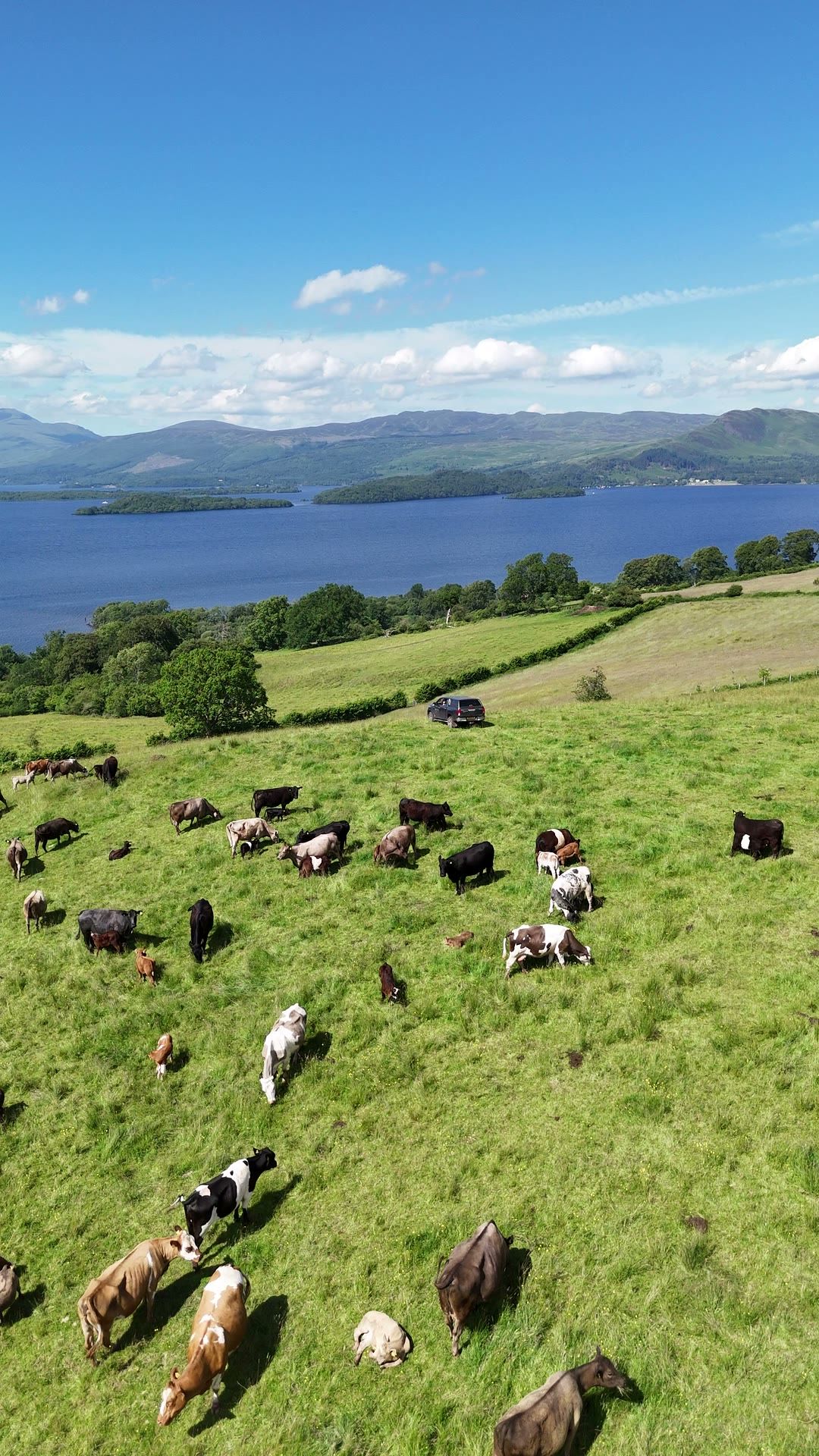
Our native breed Aberdeen Angus and Shorthorn cattle are born and reared on the farm. They grow slowly on a diet of 100% organic grass until they mature at around 30 months old. We hang the beef for a minimum of 21 days to give excellent depth of flavour and tenderness.
We rent out moorings in Portnellan Bay and offer winter boat storage. Many people bring their boat back year on year. We share our location and views with guests staying in our renovated self-catering farmhouse. We love meeting our guests and getting to know them during their stay. Many have become firm friends.
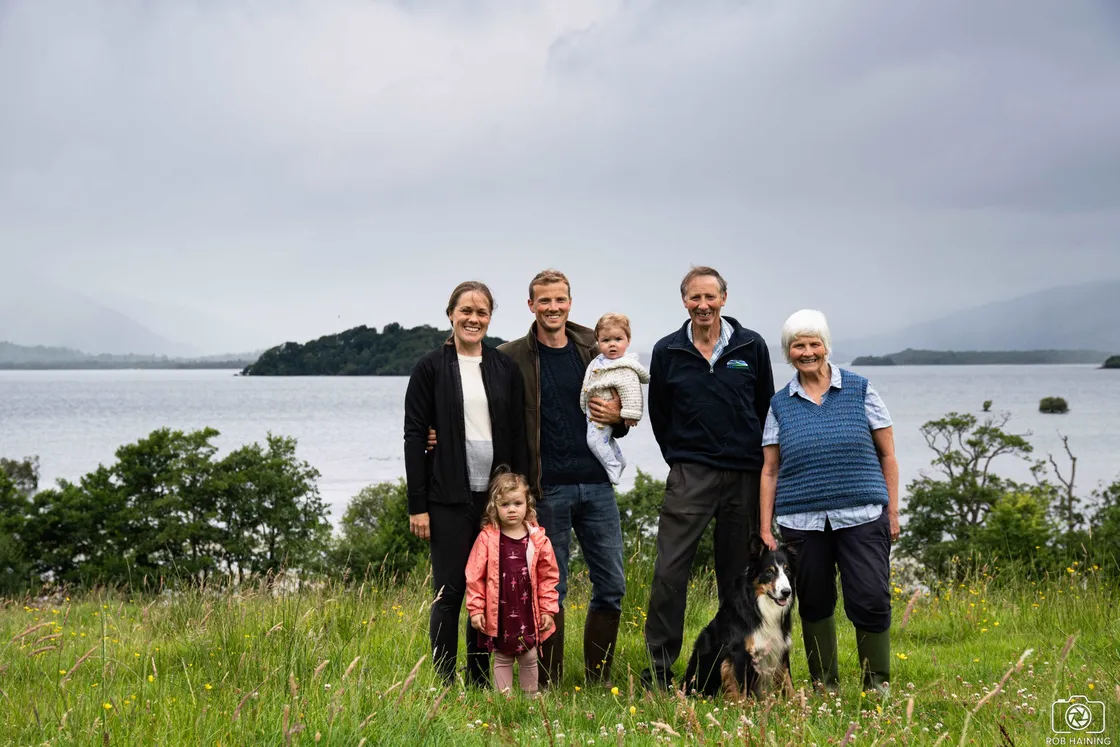
David is farmer-in-chief. He works all hours of the day and night, like most farmers with livestock. He is also a talented mechanic, builder, welder, plumber and general Mr Fix-It. He is never happier than when he is showing people round the farm or the moorings.
Freda married David in 1983 and their first task was to build their own house. She is a vet and works as a consultant in veterinary cardiology to the pharmaceutical industry. She is also an official Met Office observer and is a font of information about the climate on Portnellan. She likes nothing better than a cup of tea with visitors. She is fussy about her tea, having grown up on a tea estate in Kenya.
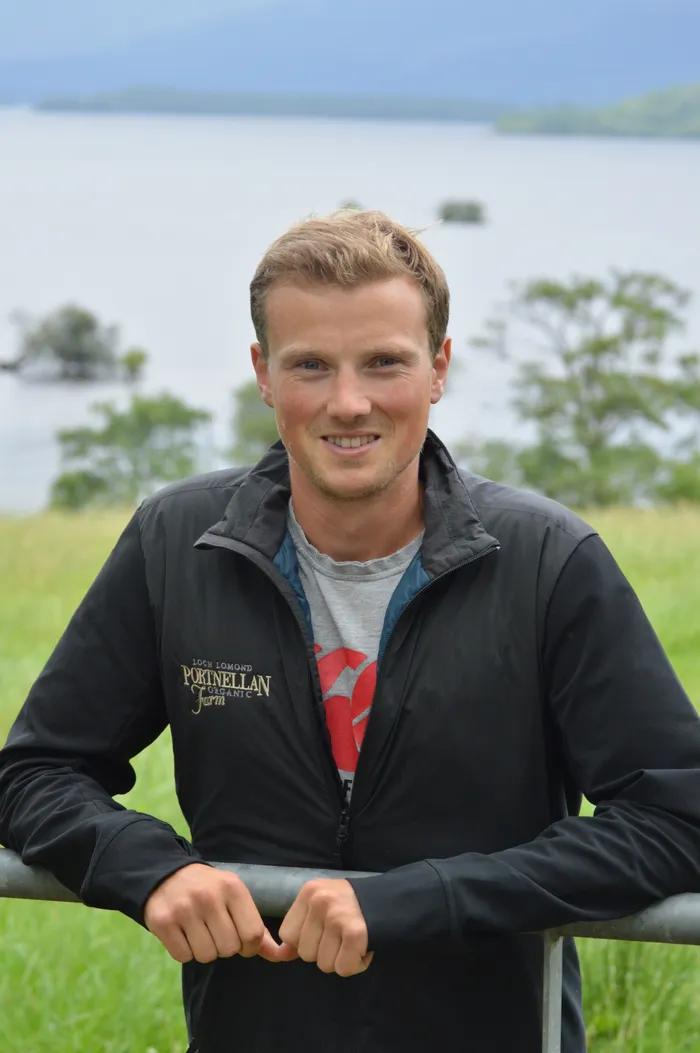
Chris graduated from Stirling University in 2013 with a degree in Environmental Science and Outdoor Education. He came back to work on the farm and is a great help to David. Alongside the farm work, Chris runs his own business on Portnellan, offering speedboat tours and water-sports equipment hire on Loch Lomond. He is a qualified mountain leader and a commercially endorsed skipper.
Ginny does not live on the farm, but it is always nice when she comes to visit.
For more than a quarter of a century we have made a conscious effort to farm organically. For us, farming organically means we work with nature, not against it. Organic farming is sustainable and protects the land for future generations.
We do not use chemical fertilisers, herbicides or pesticides. The only fertiliser we use is natural manure, in the form of slurry collected in winter while the cattle are inside and spread on the fields in spring. Many of our fields are rich in clover. Clover brings nitrogen from the air into the soil, so we do not buy it in. Instead of weedkiller, we use a topper (basically a big lawn mower) to cut weeds before they spread their seeds.
We have over a mile of Loch Lomond shoreline to look after. We try to minimise our reliance on medicines and antibiotics by preventing illness rather than curing it. Animal welfare always comes first. Our fields have not been ploughed for years, so they help take carbon out of the atmosphere and lock it up in the soil.
We are certified organic by the Scottish Organic Producers Association.
Read about our organic beef.
We stopped milking in 2010 and converted the cows into a beef suckler herd, where each cow rears her own calf.
We keep a closed herd. Every cow is bred on the farm and we bring in no new animals. We prefer smaller cows because our fields are steep. Lighter cows do less damage to the grass and soil when it is wet.
A cow has a calf every year and suckles it for about 6 to 8 months. We calve mostly in spring, with some in autumn. In summer the cows graze in paddocks and move between them every 3 to 5 days. In winter the whole herd moves indoors.
Our cows eat home grown grass in summer. Through the winter they eat silage, grass we preserve as a natural and nutritious feed.
We normally cut the grass twice in summer, once in June or July and again in August. In recent years the weather has often allowed only one cut. The mower rows up the grass. After a short wilt in the sun, the forager lifts and chops it and blows it into a trailer. The trailers take the chopped grass to the silage pit, where a forklift piles it up. Our slopes are steep, so the drivers must be skilled and experienced.
The grass must be packed tightly with no hollows. Once the pit is full and the air has been rolled out, we cover it with black polythene for an airtight seal. Naturally produced organic acids, chiefly lactic acid, then preserve the grass. That takes about two or three weeks. We usually do not open the pit for several months.
The weather plays a huge role. When the grass is ready and the conditions are right, it is a big job to get it in before it rains. Everyone works incredibly hard, sometimes right through the night.
 New Entrant of the Year 2021. Chris won the final NEWBIE UK award for New Entrant of the Year in October 2021.